

Photography by Joseph Marchant
The Future of 'Art' - Beyond the Art Market - 'The Salon'
The emergence of The Adelaide Salon is, in many ways, a philosophical statement, a reaction to the current socio-political-economic-cultural environment of this time.
This is not in the conventional sense of politics, but in response to a deeper condition, the politics of culture itself.
In recent decades, public discussion around art has become increasingly dominated by economics and politics. We ask how much an artwork sold for, how many visitors attended an exhibition, how large a cultural institution has become, or how much a collection is worth. These measurements are easy to quantify, but they often obscure a more fundamental question:
What is art and culture actually for?
This question feels increasingly urgent. The world that shaped contemporary culture has changed dramatically. Britain's relationship with Europe has shifted disrupting long-established networks of artistic exchange. The Covid-19 pandemic altered our relationship with public space and accelerated a shift towards digital life. Wars continue to reshape political realities across Europe, the Middle East and beyond. The exponential influence of Social media. and Artificial intelligence is challenging long-held assumptions about creativity, labour and authorship. At the same time, economic uncertainty and political polarisation have become defining characteristics of contemporary society.
The most profound transformation has occurred in the realm of our 'attention.'
We live in an age of unprecedented visual stimulation. Every day we consume thousands of images, fragments of information, videos, headlines and opinions. Digital platforms compete relentlessly for our attention, rewarding speed, reaction and instant gratification. We scroll, swipe, click and move on.
Even storytelling has changed.
Most contemporary entertainment is designed to minimise cognitive effort. Streaming platforms increasingly compete not only with one another but with social media, resulting in content that often assumes distraction. Viewers watch while simultaneously messaging, browsing, shopping or scrolling. Narrative becomes simplified. Meaning becomes explicit. Ambiguity is removed. Silence becomes uncomfortable. Complexity becomes a risk.
Our imagination, once an active participant, is increasingly treated as an inconvenience.
The result is not simply overstimulation.
It is a gradual erosion of our capacity for contemplation. and ability to think for oneself.
This is why art matters.
Unlike much contemporary media, art often refuses immediate resolution. It asks questions without providing answers. It invites interpretation rather than delivering conclusions. It leaves space for uncertainty, contradiction and personal reflection.
A painting does not tell us exactly what to think.
A performance does not arrive with subtitles explaining its meaning.
An artwork remains incomplete until the viewer enters into a relationship with it.
This act of participation is not a flaw in art - It is its greatest strength.
The value of culture lies precisely in the fact that it requires something from us. It asks us to slow down, observe carefully, make connections, exercise empathy and imagine possibilities beyond our own experience. In this sense, art is not content.
Art and culture are forms of thinking - The Adelaide Salon was founded around this belief.
The Salon's purpose is not simply to present art and culture but to create conditions in which meaningful engagement can occur between the art, artists, guests, connoisseurs, thinkers and communities. The salon format deliberately resists the speed, volume and consumption patterns that increasingly define contemporary culture.
Historically, salons have emerged during moments of social transformation. They provided spaces where artists, writers, philosophers and citizens could gather to exchange ideas before those ideas entered mainstream culture. They were environments where conversation itself became a creative act. The Adelaide Salon has blossomed in the void left by the Art market's thirst for constant commercialisation and consumption. The Adelaide Salon is representative of The Art World fighting back to become the The Art World again and not the Art Market.
The return of the salon today reflects a growing recognition that contemporary society suffers not from a lack of information but from a lack of meaningful engagement. We have access to more information than ever before, yet we often understand less. We communicate constantly, yet many people feel profoundly isolated. We consume 'culture 'endlessly, yet rarely have the time to question what we encounter.
The Adelaide Salon champions a culture of attentive participation and appreciation.. An experience to savour and reflect upon.
This approach challenges prevailing assumptions about how culture should be experienced. Rather than treating audiences as passive recipients, it invites them to become active participants. Rather than feeding visitors with leading information, it creates space for interpretation, question and experience. Rather than dictating meaning, it encourages personal discovery and critical engagement.


Photography by Joseph Marchant
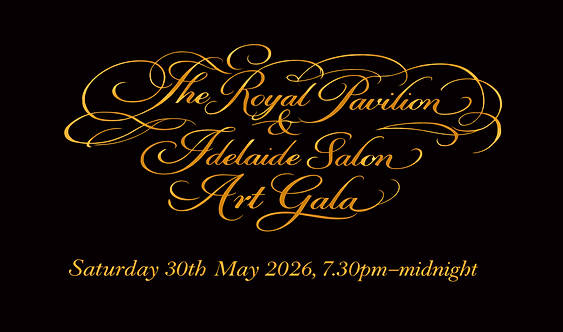
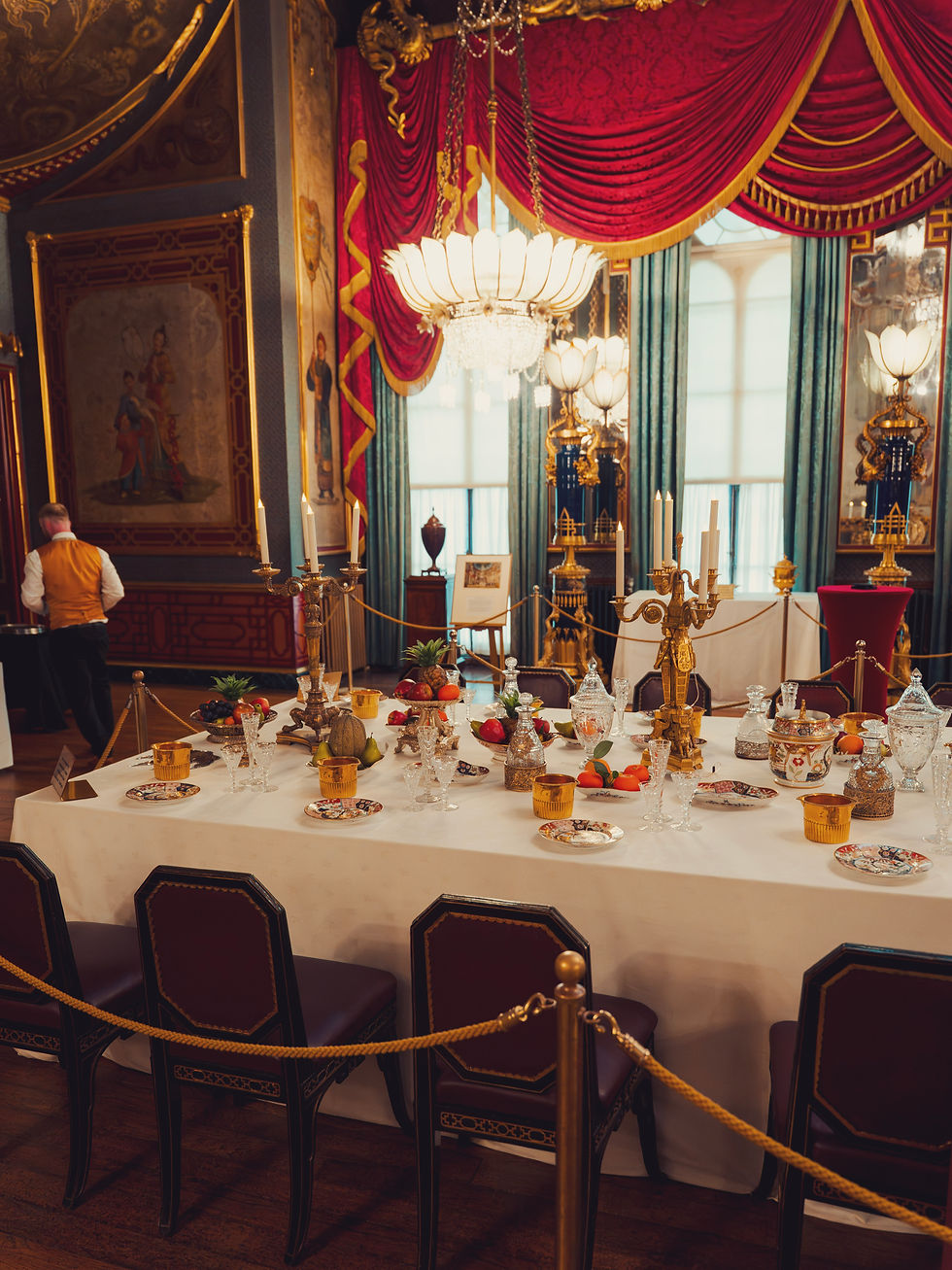
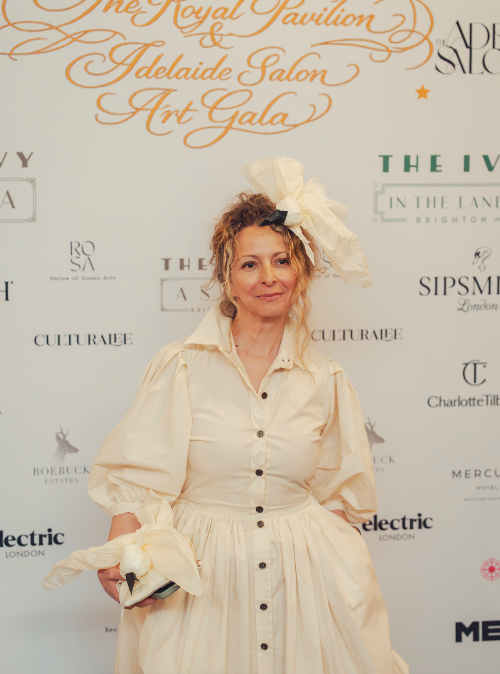
The inaugural Royal Pavilion & Adelaide Salon Art Gala highlighted this ethos. Within the extraordinary setting of the Royal Pavilion, visual art, performance, music, conversation and hospitality were brought together ,not as separate disciplines but as an interwoven experience., with guests being an integral synthesised part of this. Guests were not guided towards a single narrative. but invited to construct their own.
Every conversation became unique. Every encounter generated different associations., different experiences.
Every individual assembled a different story, and became a part of everyone else's story.
This is fundamentally different from the logic of mass culture and consumption. It trusts the audience. It recognises that imagination remains one of humanity's most important resources. This shift also speaks of the changing approach towards the relationship with and the acquisition of art..
Today someone acquiring art, being an art collector or not, increasingly seek more than acquisition. They seek context, dialogue, access to ideas and meaningful participation. They want to support artists and cultural ecosystems rather than simply accumulate objects. In an age where luxury has become widely accessible, rarity is no longer enough. What has become truly scarce is connection, understanding and belonging.
The collector of the future therefore looks less like a consumer and more like a patron; someone invested not only in preserving art but in sustaining the cultural and economic conditions from which art can emerge and blossom.
This brings us back to the crisis facing the art world. The challenge is not simply that galleries are struggling or markets are fluctuating.
The deeper challenge is that contemporary society has become extraordinarily efficient at distributing images and putting a price on everything while becoming less capable of creating meaning, critical thought and true connection. Art cannot solve political division, technological disruption or social fragmentation on its own., but it offers something increasingly rare. Art and the 'Salon' create the space where People encounter-
Complexity rather than certainty
Questions rather than answers
Imagination rather than instruction
Invitation rather than imposition
Reflection instead of emptiness
Energy rather than numbness
Sensation rather than apathy
Participation rather than consumption
This is why the 'salon' has returned. and why this resurgence feels not nostalgic, but necessary. As Pascal Dowers of The Adelaide Salon argues: "The Adelaide Salon is a 'provocateur' inspiring a system change, returning importance and relevance to the 'art' and the 'art world.' rather than being an 'Art market'."
At a moment when societies across the world are searching for ways to rebuild connection, trust and civic imagination, this proposition feels less like a cultural ambition and aspiration, but more like a public necessity.
"Necessity is the mother of invention"
The Adelaide Salon
May 2026.








CATALOG 2026
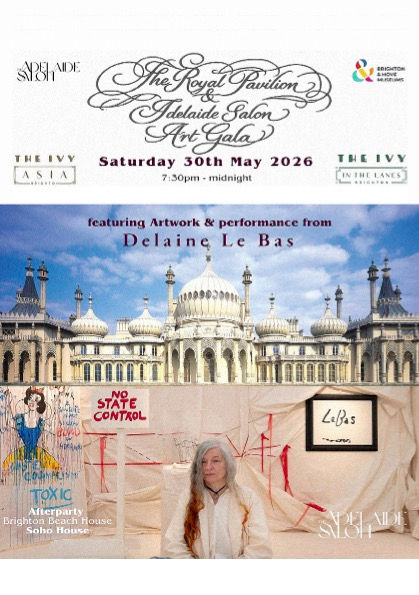
Royal Pavilion & The Adelaide Salon Art Gala marks the beginning of a new partnership between The Adelaide Salon and the Royal Pavilion Brighton & Hove Museums, opening a new chapter of Philanthropy and Patronage of Heritage and Contemporary Arts & Culture for Brighton. Invited guests experience
-
Contemporary live art and performances across the Pavilion, throughout the evening
-
Works from established and emerging artists.
-
Site-responsive art installations, film, sound, digital art and sculpture
-
Live music & curated encounters
-
Sussex sparkling wines, finest food and refreshmens
-
An intimate gathering of guests, patrons, media, artists and cultural figures
This event introduces a new model of cultural philanthropy and participation, supporting future artistic programming and heritage development in Brighton & Hove.
Thank you for your support and making The Adelaide Salon so unique.
We look forward to seeing you soon.
Warmest Regards
- Pascal & Paulina xx